Product News
February 6, 2020 | Product News

The Samsara HM11, machine health monitor, magnetically mounts to a machine case, which allows for the continuous tracking of key health parameters for pumps, fans, motors, and compressors. The HM11 records 0.5 seconds of X,Y & Z accelerometer vibration data every 5 minutes, while simultaneously recording temperature every 4 seconds. The included sensors monitor vibration in mm/s or ips with a frequency range of of 10Hz to 1 kHz and a measurement range of +/- 16g. The sampling rate for vibration monitoring is 1666 Hz with an accuracy of +/- 10%. The surface temperature monitoring with the included sensors have a range of -40 to 85 degrees C with an accuracy of +/- 1 degree C.
The data is sent through Bluetooth to a Samsara IGX1 base and then uploaded to the cloud via the integrated cell modem. Once the data is in the cloud, Samsara calculates the RMS velocity in each direction as well as an FFT spectrum between about 10 and 1000 Hz.
Below is an example of the overall RMS velocity level data for X,Y & Z. You can see it uses the ISO 10816 recommended levels for warning and shutdown. The alarm levels are designated by light red and yellow corridors.

Below is an example of the FFT spectrum output, this example shows the plots provided for the Y direction of the HM11 sensor. There are two plots generated from the FFT output, with a standard display of the amplitude vs. frequency for the most recent data sample on top and a colored (blue to red) amplitude history of the top plot right below. Data goes back in time moving down, and the timeframe is the same as the timeframe that was selected in the velocity RMS plot above.
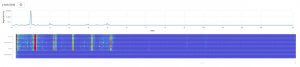
The interface is simple and user friendly. Contact Neal Systems HERE to request a demonstration.
January 29, 2020 | Product News
Neal Systems Engineer Peter Jackson has created a simple but effective solution using a Red Lion Cellular Data Modem. In this application note, Peter demonstrates a simple, but powerful feature of the event engine and how to control the level of water in a fish tank.
The same principle can be used for a municipal tank level, flow, pressure, temperature, or to a stirrer.
Find the application note here: Event Engine and Water Level
November 21, 2019 | Product News
The Foxboro Telemetry & Remote SCADA Systems (TRSS) is a logic control and data acquisition system built around the unique features and benefits of the following products: EcoStruxure GeoSCADA Expert Process Visualization Software (formerly known as ClearSCADA), Foxboro ScadaPACK Remote Terminal Units (RTUs), Accutech Wireless Instrumentation, Trio Data Radios.
Schneider Electric Foxboro TRSS can be configured and set-up via programs using menu-driven, table-driven, and point-and-click developer interfaces. Also, TRSS is optimized to be a data exchange method that fully embraces the advantages, robustness, and efficiency of the DNP3 protocol.
Neal System’s team of expert engineers can work with you to build the best system for your specific application using the Telemetry & Remote SCADA Systems (TRSS) products.
Want to learn more about the individual products or TRSS as a whole? Contact one of our application engineers here!
November 12, 2019 | Product News
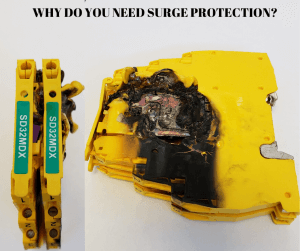
Surge protectors usually are triggered and reset when there is a potentially damaging electrical surge in signal cables. Only when the surge goes above 20kA or more do these devices fail, which is what can be seen in the photos below.
When these types of surges occur, without protection, the entire panel would likely be destroyed. Instead, a small economical device takes the hit, breaks the circuit and the entire panel is protected.
The photo shows a melted and exploded-looking MTL SD32MDX. The energy this device was able to take and divert saved the connected sensitive electrical equipment from destruction.
For around $100 a piece you can potentially save thousands in repairs and replacements with a simple installation of a surge protection unit.
November 7, 2019 | Product News
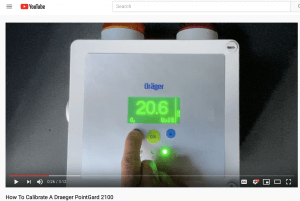
Learn how to configure a Draeger PointGard 2100 by clicking the image below!