Neal Systems Provides Steam Distribution Control Panel to State-of-the-Art Philadelphia Medical Center
A brand new, state-of-the-art, medical center that recently opened its doors in Center City Philadelphia, PA expressed a need for control and monitoring instrumentation for its facility steam distribution system. The distribution system supplies steam to critical sub-systems within the center, including those for hot water generation, HVAC, and medical equipment sterilization.
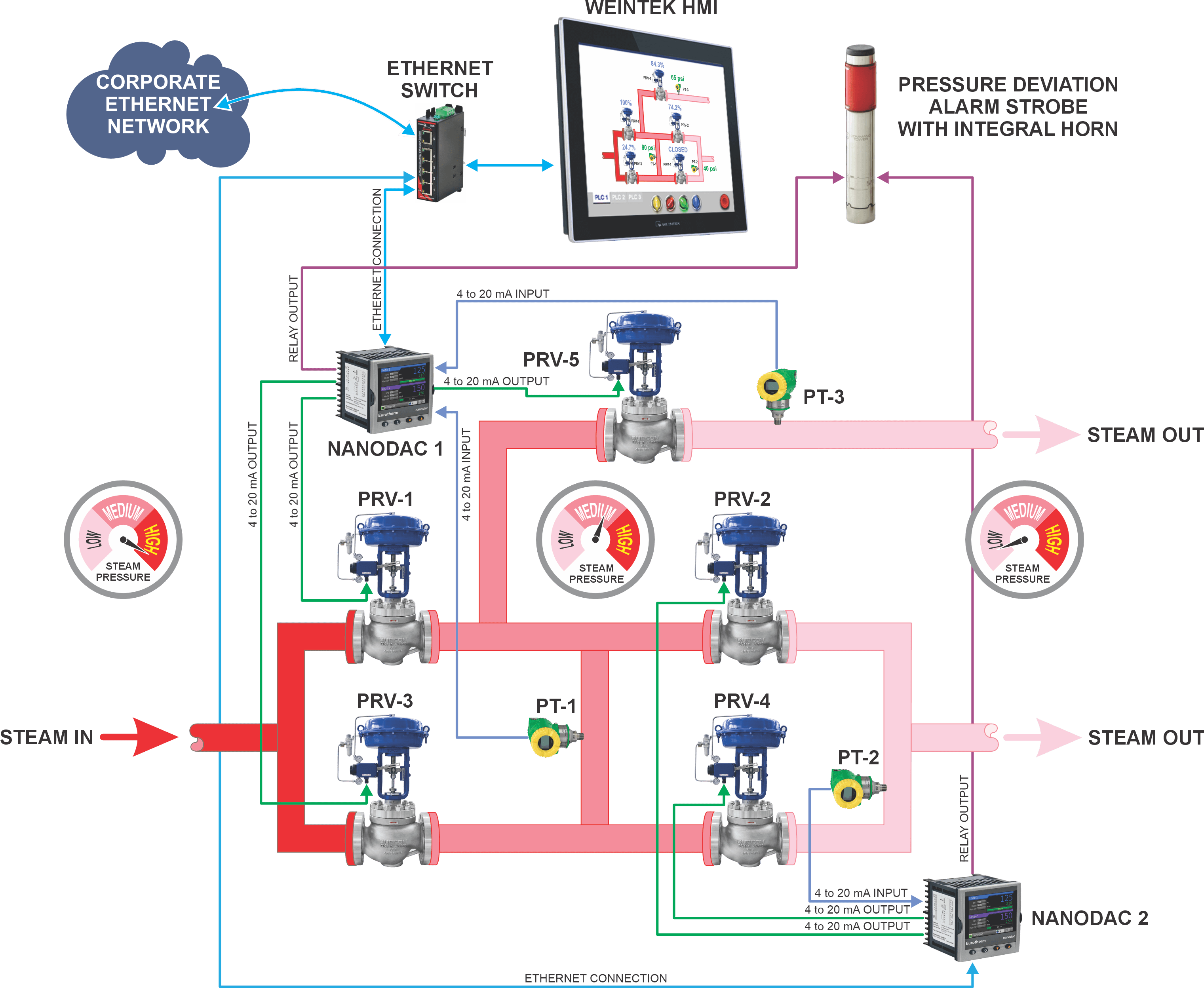
The control panel Neal Systems provided was ultimately built around two Eurotherm Nanodac Controller/recorders and a 15-inch Weintek Touchscreen HMI.
In the control panel, the Nanodac pair governs the operation of a network of Pressure Relief Valves (PRVs)into which high pressure municipal steam is introduced; where Pressure Transmitters (PTs) measure distributed steam pressure.
PID Pressure Control Loops set up in the Nanodacs enable the PRV network to not only step steam pressure down in stages from high to medium to low so that it’s optimized for sub-system use, but also keep sub-system demand for steam fulfilled as the sub-systems repeatedly approach and back away from full capacity operation over the course of a typical workday.
The control panel’s Weintek Touchscreen HMI offers building operators an interactive display of data quantifying several aspects of steam distribution system activity including valve positions, target steam pressure measurements, and pressure deviation alarms which trip whenever steam pressure within the system falls too low or runs too high.
Displayed data is overlayed on custom graphics depicting steam distribution plumbing, thereby offering a physical picture by which operators can assess system operational integrity.
A local alarm strobe with horn is also fitted on the control panel that energizes each time a pressure deviation alarm goes active. A virtual “Alarm Acknowledge” button configured into the HMI Touchscreen can be pressed to silence the alarm horn once Operators are fully notified that a steam pressure deviation event has taken place.
All parameters displayed by the Touchscreen HMI are also recorded in real-time by the Nanodacs. Because the Nanodacs and HMI are Ethernet-enabled, the data they display, control, and collect can be made available to other systems, such as data historian, building management, and energy monitoring ones, via corporate Ethernet network link.
Overall, the Nanodacs and Weintek Touchscreen HMI make the medical center’s steam distribution control panel an invaluable tool for managing the facility’s use of a vitally important utility. Facility operators and technicians are provided a system interface that makes the day-to-day tasks of steam distribution monitoring,performance optimization, and predictive maintenance convenient and easy, while managers have at their fingertips reliable data by which to base operational,procedural, and budgetary decisions impacted by the center’s steam usage.
Controlling and monitoring assets in remote operations is a significant challenge for industries like wastewater and energies and chemicals. Remote operations encompass the control and monitoring of assets distributed throughout large geographical areas. These areas may be rural and can be in a harsh environment (e.g., polar, desert, tropical or more). They include locations with limited or no cellular service where other forms of communication are used to transmit information from remote terminal units (RTUs) to their supervisory control and data acquisition (SCADA) system.
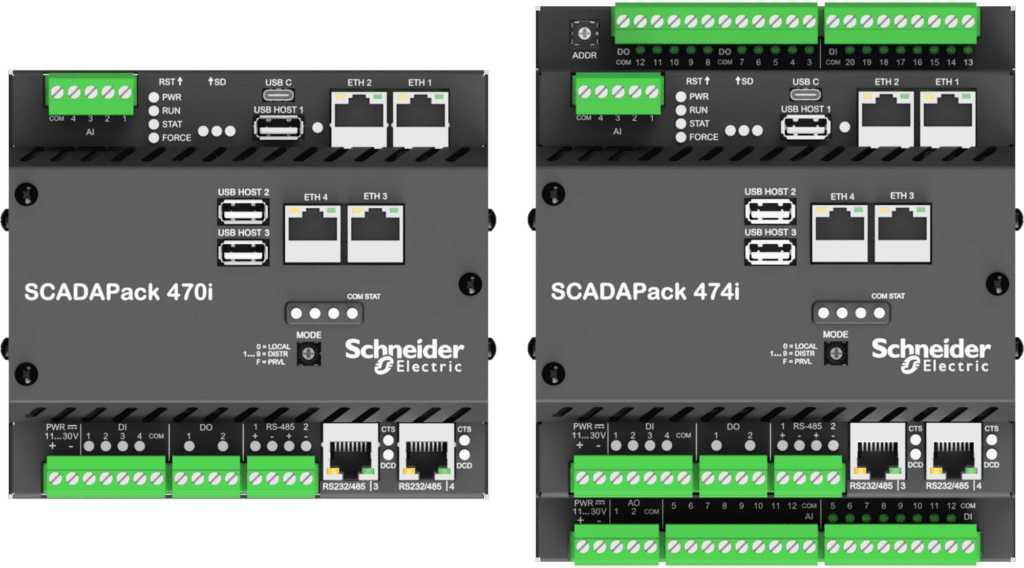
Normally, maintaining and servicing an area containing multiple remote assets requires an on-hand technician with direct access to the SCADA system to effectively monitor the status of the facilities. But now, through Schneider Electric’s SCADAPack™ 470i and 474i Smart RTUs, remote assets can be controlled and monitored from anywhere using at-hand devices like laptops or smartphones.
With this new solution, the remote asset operators will be able to simplify the design of their telemetry network. SCADAPack can be used as a data concentrator, impressing the data from remote sites onto a smaller package that could be communicated over data radios. But this is only the beginning of this solution’s capabilities.
Open in every aspect of the word
To help increase energy efficiency and enable autonomous remote system maintenance, Schneider took an open approach with this RTU. We combined a real-time operating system (RTOS) with a Linux-based applications processor. This way, the SCADAPack 470i and 474i provide a dedicated platform for advanced edge computing services and protocols. These capabilities mean that the SCADAPack 470i and 474i are open to legacy and next-generation solutions.
SCADAPack 470i and SCADAPack 474i enhanced remote terminal units with edge computing
RTOS provides the legacy capability companies need and expect from an RTU and programmable logic controller (PLC). It also enables the critical performance needed for monitoring inputs and outputs for control of instrument communications, in addition to support for the legacy telemetry protocols, as well as for IEC 61131-3 logic.
We also wanted to make this solution open in terms of where it can be deployed. The new SCADAPack series can operate across a wide temperature range, from minus 40 degrees to 70 degrees Celsius, as well as high levels of humidity, vibration and shock.
By drawing on more sources of information, better decision-making occurs in whatever industry the control application is being used in. This includes production automation and optimization in the form of pump automation, leak detection, analytics, and a slew of applications. The information is gathered from the site, combining with information from other sources, like the cloud or a SCADA system.
The immediate detection and reporting of any abnormalities from these remote sites, and the ability to automatically make corrections, is what this type of IoT technology is evolving towards.
Centralized RBAC to harden against cyberattacks
When it comes to critical infrastructure and pipelines, cybersecurity threats have evolved from affecting IT to include OT systems. Legacy OT systems are vulnerable and don’t interface with standard tools traditionally. Over the past few years, we’ve seen a few examples of this vulnerability. For instance, there’s the Colonial Pipeline ransomware attack, the compromised SCADA systems in a U.S. water treatment facility in Oldsmar, Florida, and, more recently, the exploitation of wastewater system PLCs in Aliquippa, Pennsylvania.
Today, regulations are forcing authorities, responsible for critical infrastructure such as pipelines and water wastewater, to increase their cybersecurity posture. Larger companies also recognize the threat to their business continuity and their share value. This is a challenge that IT-ready, role-based access control in SCADAPack 47xi addresses.
With the addition of role-based access control (RBAC) to SCADAPack, IT or OT security can leverage tools they’ve already invested in. This includes directory services tools like Active Directory and privileged access management (PAM) solutions such as CyberArk® or Solarwinds®. Implementing IT-compatible RBAC simplifies and streamlines implementation of security for OT users. Additionally, it satisfies regulatory requirements with minimum cost and effort. Users can control access to OT equipment across the network as easily as managing an employee’s email access.
Employing networkwide RBAC in RTUs is a powerful way to centralize, derisk, and ease maintenance. Incorporating a centralized RBAC into SCADAPack allows for scaling and is hardened for risk, enabling OT security and IT to:
Mix and match privileges
Change configurations
Assign RTUs to groups
Geographically control access
Why Linux makes all the difference
Security features are weaved into the core of these new RTUs, from conception to design and through implementation, runtime and communications. Indeed, the SCADAPack 470i and 474i conform to IEC 62443 SL1 cybersecurity standards. There’s flexibility for users to implement those security features in their solutions quickly and easily. Additionally, the RTU still can perform core operations once they have access to it. A secure boot chain helps to prevent tampering with the SCADAPack itself.
Incorporating RTOS means sophisticated decision-making using various sources of information is done in real-time.
For example, if you have a set of pumps used for a contract with an electrical company for power spot prices, we have the ability now to draw real-time cost information to, say, slow down a pump during power spikes. These small, cost-saving practices go a long way, especially if utilities ask companies to minimize operations. Another example might be sensing undesired mixtures in an oil pipeline and adjusting a separator accordingly.
Flexibility around communication serves as an immediate benefit. But the capabilities of smart assets — IIoT-enabled products imbued with machine learning or artificial intelligence — is the future of process automation.
SCADAPack RTUs offer better edge capabilities
This marriage of Linux-based application processor with RTOS paves the way for more resilient and efficient remote operations for many years to come. It provides a dedicated platform for advanced edge services, data, protocols, and applications. It does this while addressing IT and cyber-driven requirements.
These and other components will extend the life of any remote operations, aiding the digital transformation journey and IT-OT convergence. It also supports your current, as well as future, needs in a single rugged device.
To learn more about SCADAPack 470i and 474i and how it can have a profound impact to the resiliency of your operations and efficiency of your workforce, visit the SCADAPack website.
Expo Technologies is excited to announce that the SmartPurge Z, their newest Purge & Pressurization system, has been granted ATEX, IECEx and UKEX certification. The SmartPurge Z is one of the simplest purge systems available, while offering all the capabilities electrical panel builders and OEMs are looking for.
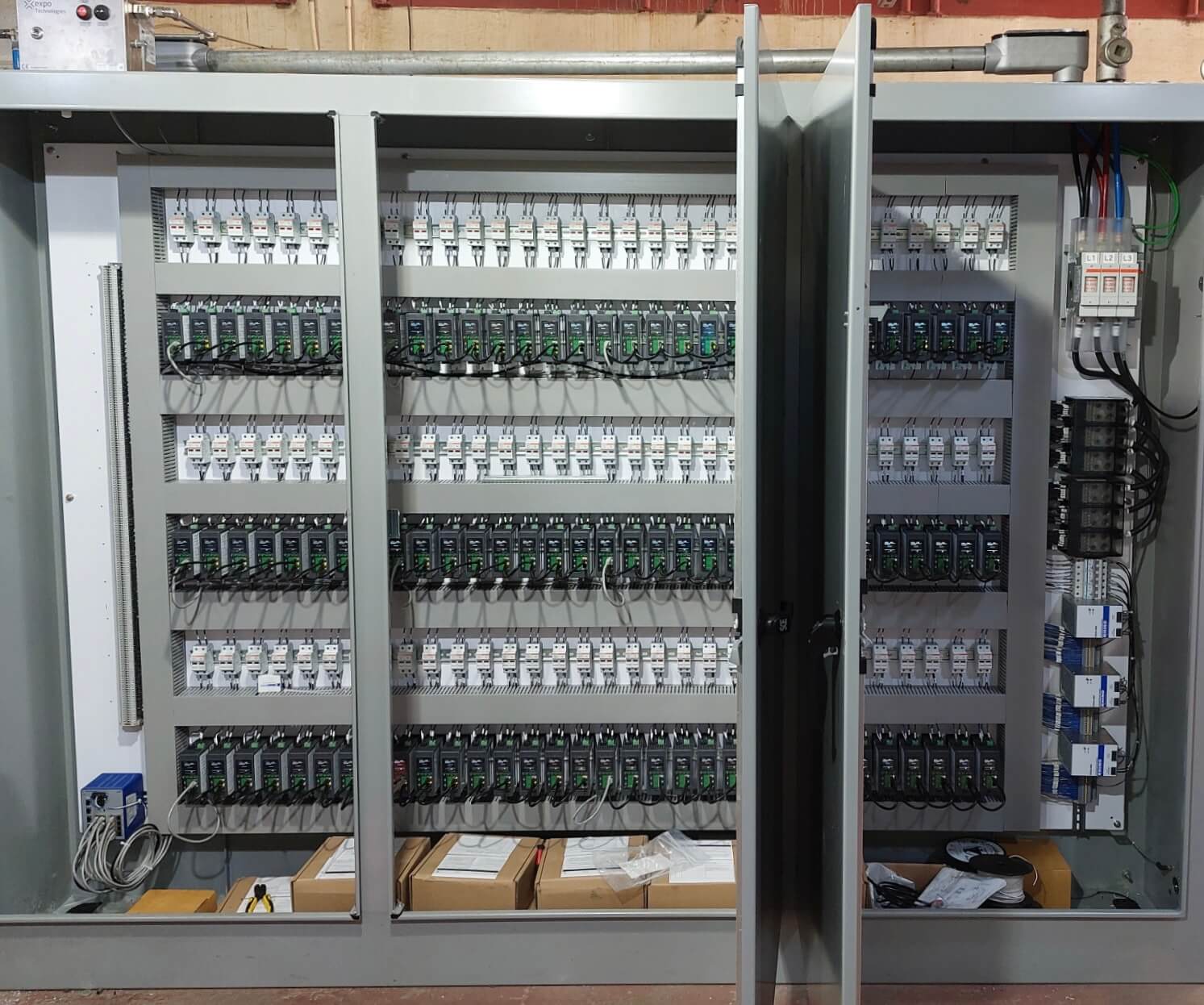
Neal Systems is excited to continue building our panels with one of the best Purge & Pressurization systems on the market. Here’s a panel we designed and built for one of our gas customers. If you would like more information on how we can solve your needs, contact us here.
Neal Systems is proud to announce that we were selected to extend our representation of the Dräger Fixed Gas Detection line into Maryland, Washington D.C., and Northern Virginia.
With almost 30 years of experience in representing Draeger in DE, NJ, & PA, we are excited to extend our reach with this line.
Draeger’s complete portfolio of fixed gas detectors includes an extended range of toxic, flammable and oxygen monitors that interface seamlessly with their range of control systems and other components, even third-party devices.
We can offer instrumentation assistance, engineering, calibrations, installation services, & more.
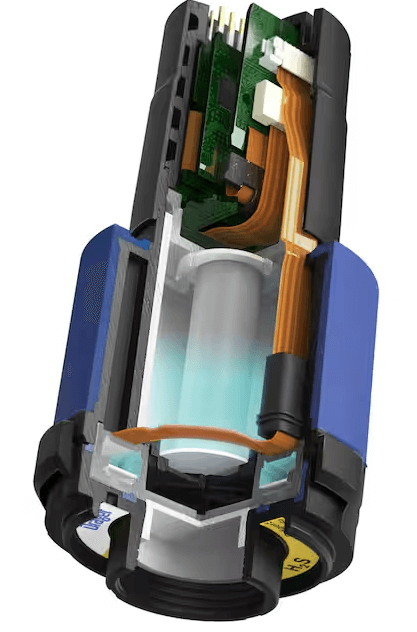
We’ve noticed a trend with our customers who need to detect hydrogen sulfide, especially in the waste water, refinery, and paper mill industries. Common complaints are: “Our H2S sensors don’t last” and “I need to calibrate my sensors more often than I anticipated.” Have you had similar experience? Draeger has solved our customer’s common concerns with a self-testing, daily bump test sensor. The Dräger SensorAlive is an electrochemical sensor with an integrated gas generator. The gas generator enables daily automatic sensor testing with hydrogen sulfide (H2S) as the test gas. It also alerts when the sensor inlet is clogged, preventing gas from reaching the sensor. Daily bump tests help to improve the safety of your gas detection system and allow for extended preventive maintenance intervals.
LifeTest: a daily bump test
SensorAlive performs a LifeTest on a daily basis to check the function and sensitivity of the integrated electrochemical sensor. The LifeTest consists of two sequential activations of the gas generator, a sensitivity test, and an obstruction test of the sensor using 2 internal nozzles. A single test takes about 8 minutes to complete. The complete LifeTest process, including the conditioning of the gas generator, performing two sequential tests, and evaluating the sensor data, extends over a period of approximately 8 hours. During this time, the sensor retains its ability to detect gas.
Extended calibration interval
Calibration of the electrochemical sensor is still required at regular intervals. During a calibration, the gas generator is also calibrated by SensorAlive at the same time. The calibration interval of electrochemical sensors can be extended when using SensorAlive. The calibration interval can be determined and adjusted according to application requirements as SensorAlive performs a daily check and issues a warning or error message if there is a deviation.
Proven measuring technology
As with all DrägerSensor® electrochemical sensors, the Dräger SensorAlive offers fast response, high accuracy and stability, long service life, and established principles of intrinsic safety for electrical explosion protection. Coupled with the Dräger Polytron 8100 transmitter, Dräger SensorAlive provides access to proven measurement technology, permitting usage in Zone 1 / Div 1 rated hazardous atmospheres. Remote sensor installations up to 30 meters (100 feet) away from Polytron 8100 transmitters are supported. The Dräger SensorAlive is also plug-and-play ready thanks to built-in electronic intelligence and pre-calibration. Overview of the H2S Sensor: